




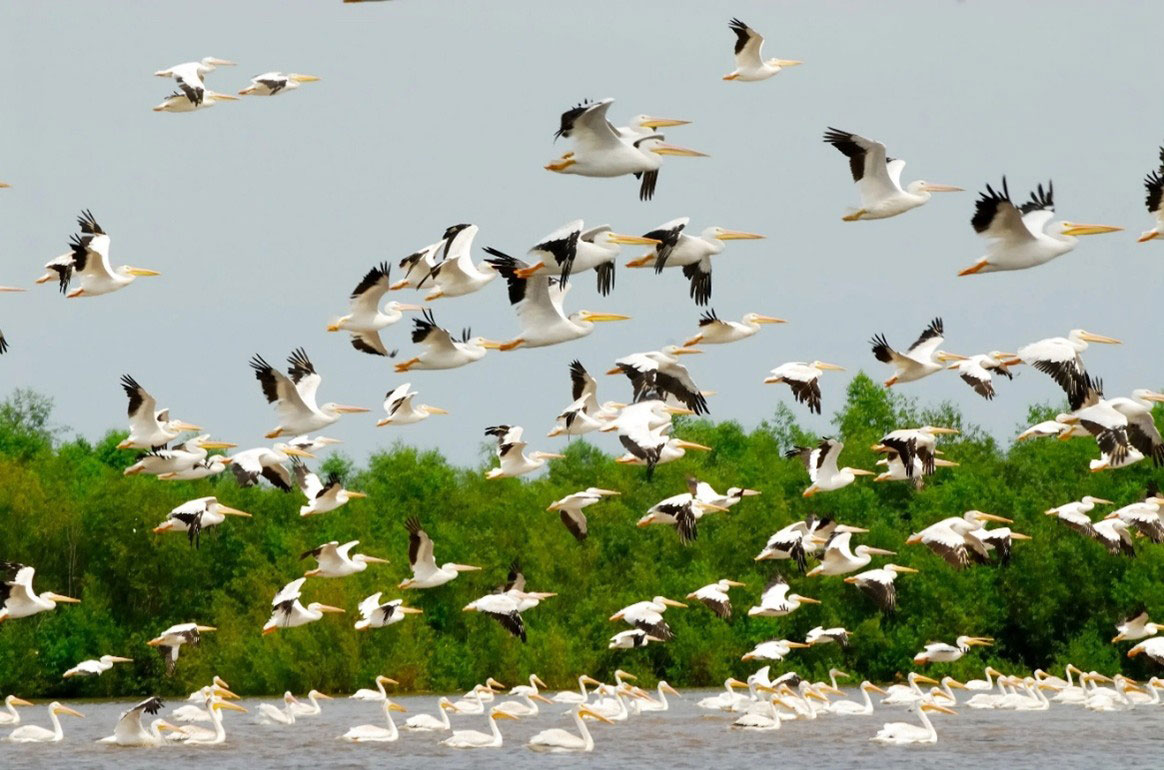
Dixon Waterfowl Refuge at Hennepin & Hopper Lakes
Source of Picture: The Wetlands Initiative
The Ramsar Convention on Wetlands
For “the conservation and wise use of all wetlands”
Ramsar Convention
The Ramsar Convention on Wetlands (commonly called the Ramsar Convention) is the oldest of the modern global intergovernmental environmental agreements. The treaty was negotiated through the 1960s by countries and non-governmental organizations concerned about the increasing loss and degradation of wetland habitat for migratory waterbirds. Adopted in the Iranian city of Ramsar in 1971, it came into force in 1975. The mission of the Convention is “the conservation and wise use of all wetlands through local and national actions and international cooperation, as a contribution towards achieving sustainable development throughout the world.” Illinois has lately come to the forefront of conservation of wetlands. In fact, of the 41 United States sites designated as Ramsar Wetlands of International Importance, 4 are located in the state of Illinois. Let’s take a deeper look at conservation efforts being done for wetlands in Illinois and, particularly, by The Conservation Foundation.
The Ramsar Convention encourages the designation of sites containing representative, rare or unique wetlands, or wetlands that are important for conserving biological diversity. Once designated, these sites are added to the Convention’s List of Wetlands of International Importance and become known as Ramsar sites. Over the last 50 years, Ramsar has designated more than 2,400 sites across the globe.
As per the Ramsar Convention, a wetland is defined as “areas of marsh, fen, peatland or water, whether natural or artificial, permanent or temporary, with water that is static or flowing, fresh, brackish or salt, including areas of marine water the depth of which at low tides does not exceed six meters.” The Ramsar Convention uses nine criteria to designate Wetlands of International Importance. A wetland qualifies if it meets any one of these criteria. Once a site is designated as a Wetland of International Importance (Ramsar Site), it receives a range of benefits and protections including legal and governmental obligations for management of the site, support for preservation of the site, and enhanced international reputation.
Illinois – Ramsar and Beyond
Illinois has four designated Ramsar Wetlands of International Importance:
- Cache River-Cypress Creek Wetlands: Located in extreme southern Illinois, this 18,047-acre ancient glacial floodplain features massive, centuries-old bald cypress trees and Tupelo swamps. It was designated a Ramsar site in 1994.
- Chiwaukee Prairie Illinois Beach Lake Plain: Designated in 2015, this 3,716-acre site is one of the few cross-border Ramsar sites in the U.S. Stretching 15 miles from Waukegan into southeast Wisconsin, it contains high-quality coastal dunes, swales, and fens.
- Emiquon Complex: Located along the Illinois River near Lewistown, this 2,631-acre refuge (along with the adjacent Emiquon Preserve) is a major restored floodplain ecosystem. It was granted Ramsar status in 2012.
- Dixon Waterfowl Refuge at Hennepin & Hopper Lakes: Located in Putnam County in the Illinois River Valley, this 2,700-acre site was designated by Ramsar in 2012. It is a highly successful, ongoing floodplain restoration by The Wetlands Initiative.
Click the image of the Interactive Map to see more details on these and other United States sites.

However, Illinois history reflects a net loss of wetlands. Illinois used to be home to more than 8 million acres of wetlands but, according to the U.S. Fish and Wildlife Service, now only has about 10% of its original wetlands remaining. Reflecting its past of getting Ramsar Site designations, Illinois has recently become more active in other ways for the protection of wetlands. Illinois passed the Illinois Rewilding Law. By doing so, Illinois became the first state in the U.S. to recognize rewilding as a conservation effort. The Illinois Rewilding Law went into effect at the beginning of 2026. The Rewilding Law empowers the Illinois Department of Natural Resources to pursue projects that restore land to its natural state, and could encompass the reintroduction of keystone species like beavers and bison. Although the law does not mandate any specific actions and is considered largely symbolic, it is an important first step toward enacting legislation with permitting powers.

In response to the U.S. government’s redefinition of “Waters of the United States” and rollback of legal protections under the Clean Water Act, Illinois has introduced The Illinois Wetlands Protection Act (HB 3596). The bill would create a state-level permitting program, prohibiting the discharge of dredged or fill material into a state jurisdictional wetland without a permit from the Department of Natural Resources. It would also allow counties and special districts to develop their own wetlands protection programs and impose civil penalties for violations. The legislation would also establish a Wetlands Protection Fund and allow citizens to file complaints with the Illinois Pollution Control Board. However, it faces opposition from agricultural groups like the Illinois Farm Bureau and is currently stalled in the House Rules Committee.
The Conservation Foundation and Wetlands
Over the years, The Conservation Foundation has advocated for the preservation of wetlands. Wetlands come in many forms beyond the Ramsar definition. Streams and stream corridors, for example, are one of the most important kinds of wetlands and a major focus for The Conservation Foundation. Many small, isolated wetlands degrade over time due to past agricultural practices and development, and many of them aren’t worth “saving” from a business viewpoint; that’s why wetland mitigation is so popular, and The Conservation Foundation and others have come a long way over the past few decades in understanding how to build better wetlands. It helps that DuPage County has one of the best and most restrictive stormwater and wetland protection ordinances around.
Today, one of The Conservation Foundation’s highest priorities is land acquisition and conservation in the Lower Fox River Conservation Opportunity Area (COA) as designated by Illinois Department of Natural Resources (IDNR) Illinois Wildlife Action Plan. This area includes lots of wetland areas, mostly in Kendall and LaSalle counties, and we are restoring and creating wetlands at our Dayton Bluffs and Belrose preserves.
Finally, The Conservation Foundation is advocating for the Illinois Wetlands Protection Act, and as the bill gets more legs, The Conservation Foundation will reach out to its members and constituents for help.
So how can you contribute to conservation efforts that help with the conservation and wise use of wetlands? Well, that is what The Conservation Foundation has been doing for more than 50 years. We can all do more together than we can alone. Join our collective momentum — become a member today!
Feel free to comment on this blog with your thoughts on wetlands conservation and the Ramsar Convention on Wetlands.
By Steve Stawarz, Oak Brook
DuPage County Advisory Council Member