




By Eric Izzo, Assistant Farm Manager
Happy February, and more importantly, Happy Snow! I’ve done a lot of complaining lately about how little snow we’ve received this winter. Yes, I know it’s a pain to drive in, to shovel, to dust off the car, and all the salt everywhere. But just remember, when you are channeling your annoyance, this is the fault of cars and concrete, not the snow. The snow isn’t the one asking for more salt.
Even having to drive and shovel and all those things, the positives outweigh the negatives every time for me! Beyond me personally, plants and the soil appreciate a good snow cover as well. When there is a nice snow blanket covering the soil, plants are able to survive lower temperatures because the snow is insulating. I’ve seen plants like lettuce, chard, and kale here survive –20 degrees with a snow cover, but without any snow cover temps below 10 degrees can kill them.
What have we been up to at the farm? Other than cheering on the snow, the consistently cold weather has allowed us to focus on the riveting Excel spreadsheets that come with crop planning. We recently completed the rest of our seed order, and boy am I happy to be done with that! When the seed catalogs first arrive, there’s an excitement about finding some cool new varieties. Then at some point, after reading through hundreds and hundreds of varieties across multiple seed companies and realizing that of course they have an interest in putting a positive spin on their listed seeds, I begin to ask myself what am I doing? Its information overload; all of the varieties sound great, which is funny when I picture some of our crop results last year compared to the descriptions.
But of course, while starting with quality seed is an important part of the equation, it’s only a part. The culture within which that seed is grown is arguably more important. That includes the soil in which it is grown, which is impacted by living things, both from the past and today. The most expensive hybrid carrot seed will not produce a harvestable crop if no weeding is done and grown in poor soil. And conversely, if the cheapest carrot seed you can find is planted, watered, and weeded multiple times, that crop will be better than the former. So, there’s a point we reach where the best genetics will only get us so far, the rest is culture.
I am ready to move on from seed ordering and into hiring. Hiring heavily impacts our culture. Our seasonal crew typically consists of 3-4 full-time people, and the best investment we can make in the farm is by hiring people who are driven, who have a positive attitude, who are willing to go against the grain, and who are willing to get their hands dirty. Of all the factors which make me happy to work at McDonald Farm, the people I get to work with is the most important. 
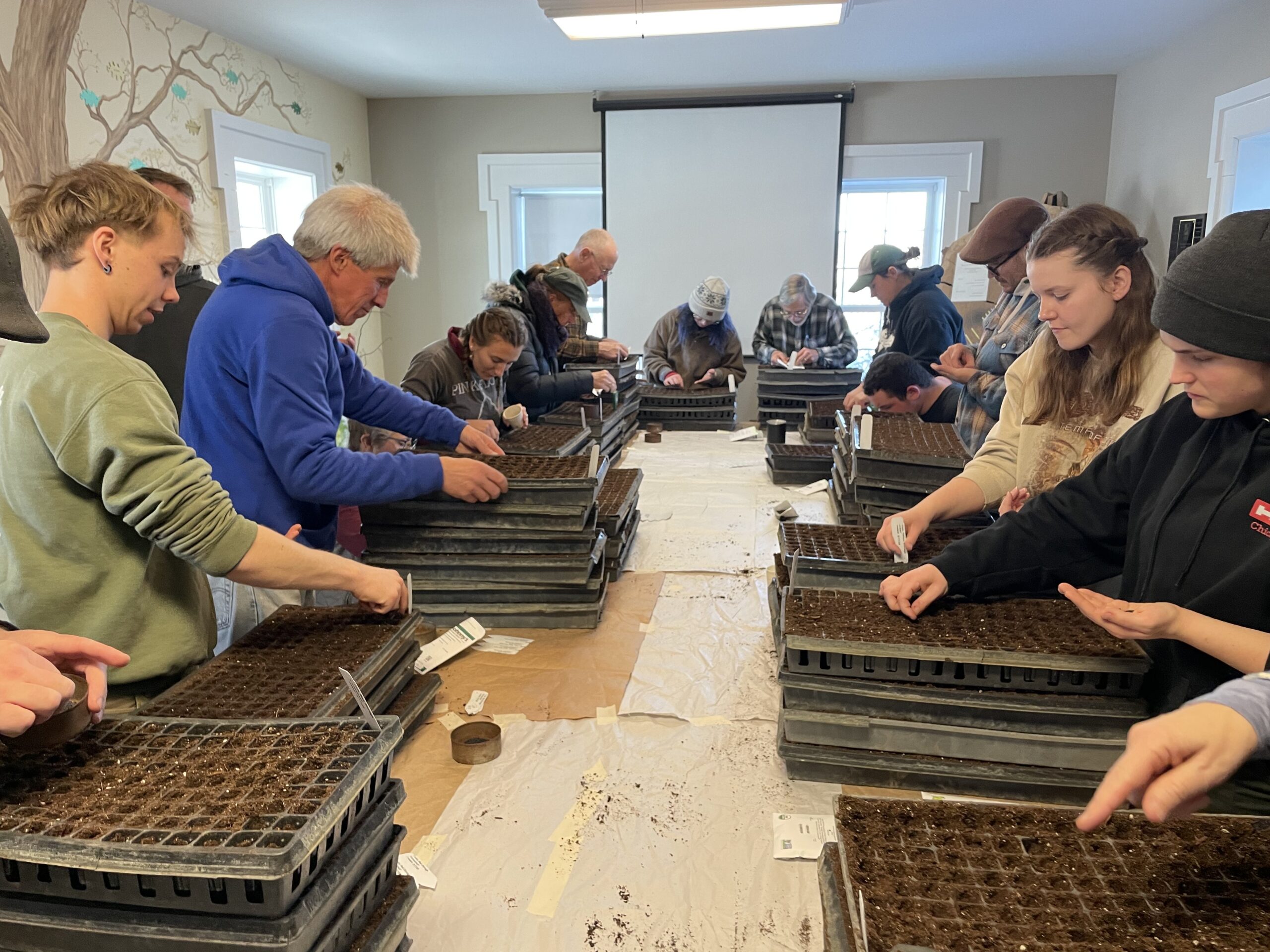
On the topic of seeds and people, we recently had an event which had both… our annual onion seeding day! Every year around mid-February, we seed all of our storage and fresh onions with the help of seasonal crew and volunteers. This year, we had a packed (Clow) House! It is tempting to think the main goal of onion seeding day is, as one may guess, to seed our onions. As time goes on though, I’m becoming more convinced the main purpose of onion seeding day is to get together at a time of the year when we all could really use it. The fact that onions get seeded is a bonus. I appreciate the people who spent years breeding the onion varieties which we choose to grow here. And I especially appreciate the people whose time and effort contribute to making McDonald Farm a special place.
To seeds, people, and the deep connection between the two. AND MORE SNOW.
Farmer Eric